The March Break Home Audit: DIY Wins, Realtor Secrets, and the "Previous Owner" Curse
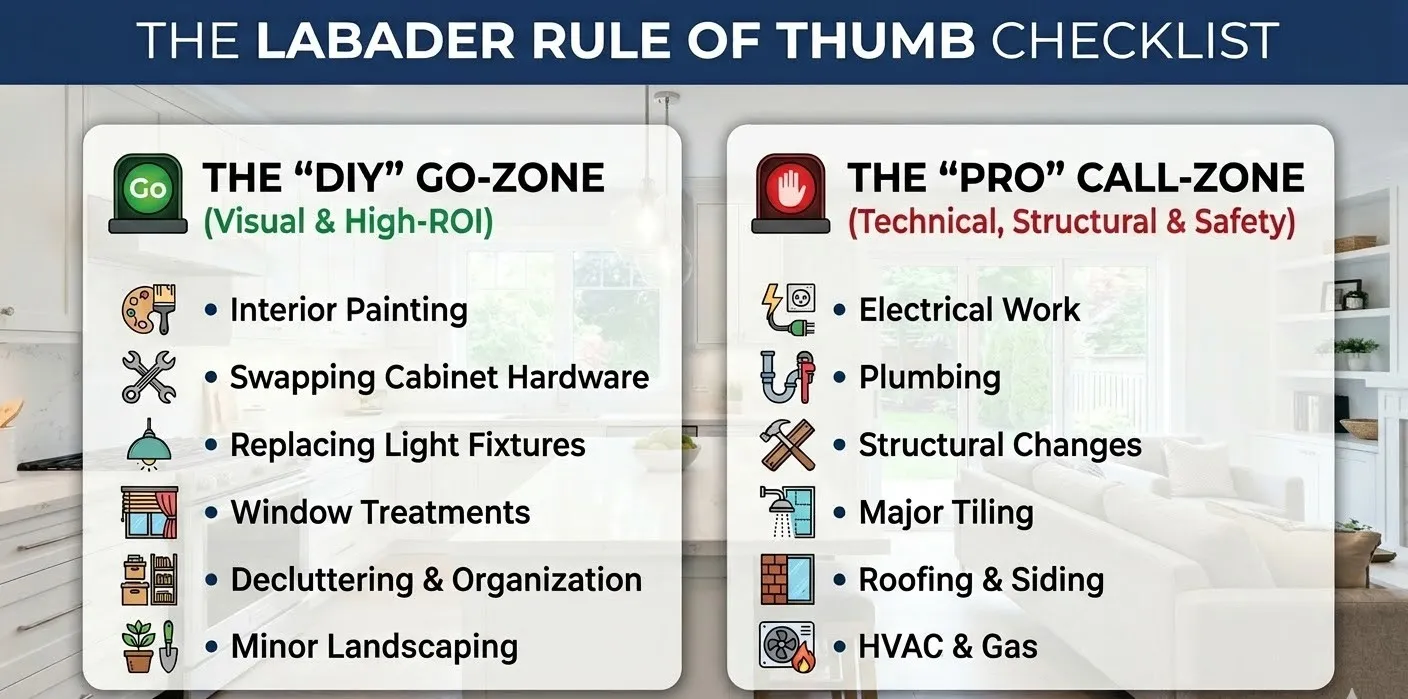
LaBader DIY checklist
March Break in Orléans usually means two things: slush on the driveway and a sudden, intense realization that your house feels a little cramped. With the kids home and the sun finally hitting the dust on the baseboards, the urge to "fix things up" is real.
But before you head to Home Depot, let's talk about the fine line between a weekend win and a renovation nightmare…
The Realtor’s Verdict: Where the Money Is
We polled our local real estate partners to see what actually moves the needle in 2026. Their answer? Clean lines and fresh faces.
Realtors consistently see the highest ROI on projects that focus on "Visual Refresh." This means painting (in those updated warm neutrals), updating old yellowed light switches, and swapping out dated cabinet pulls. These are low-risk, high-reward DIYs.
However, they also offer a warning: "Buyers can smell a bad DIY project from the driveway." If a buyer sees sloppy caulking in the bathroom or a crooked backsplash, they immediately start wondering what else is wrong behind the walls. A bad DIY doesn't just cost you time; it can actually devalue your home by signaling "hidden maintenance issues."
The "Previous Owner" Syndrome: Why We Get the Call
At LaBader, we spend about 30% of our time fixing what the last person did. We’ve all been there. You start a "simple" bathroom Reno, peel back one tile, and realize the previous owner used regular drywall instead of cement board, or "handyman-special" plumbing that’s been slow-leaking for three years.
Homeowners often call us frustrated, saying, "I just wanted to update the vanity, but the DIY mess behind it is a disaster."The Lesson: If you’re doing a DIY project, do it to code. If you aren't sure how to waterproof a shower or wire a GFCI outlet, hire a pro. Saving $500 today by DIY-ing a technical trade often leads to a $5,000 repair bill for the next owner (or yourself) in three years.
The "Safe" DIY Zones: Drywall & Decluttering
If you have the itch to work this March Break, focus on the two things that offer massive impact with zero structural risk:
1. The Art of the Patch (Drywall)
Drywall work is the ultimate "patience" DIY. Most homes have "character marks"—dents from moving furniture or holes from old TV mounts.
The DIY Win: Learning to mud and sand properly. It’s messy, but it’s safe. Smooth, flawless walls make a home look brand new.
The Pro Tip: Use a bright light held sideways against the wall to find imperfections before you paint. If you can master a seamless patch, you’ve saved yourself a professional service call.
Painting : If you need help with paint you can read our previous blog on Paint Colors here
2. Decluttering: The Zero-Cost Renovation
We often tell clients: "You don't need a bigger kitchen; you need fewer appliances on the counter." March Break is the perfect time for a "purge." Decluttering isn't just cleaning; it's spatial design. * Empty your pantry.
Clear the "drop zone" in the mudroom.
Donate the toys the kids outgrew two years ago.
A decluttered home feels more expensive, more spacious, and—most importantly—more peaceful. It’s the highest ROI "project" you can do, and it only costs you a few boxes and a trip to the donation center.
The LaBader Rule of Thumb
If it’s cosmetic (Paint, hardware, declutter): Grab the sandpaper and go for it.
If it’s structural, electrical, or involves water: Give us a call.
We love a good DIY spirit, but we love a safe, well-built home even more. Let’s make sure your "March Break Project" doesn't become the "Previous Owner Story" the next person tells!