Safety First: Why We Test for Asbestos
At LaBader Construction & Home Renovation, we believe that a beautiful home starts with a safe foundation. Whether we are knocking down a load-bearing wall to create an open-concept living space or stripping back layers of decades-old flooring, there is one silent guest we always look for first: Asbestos.
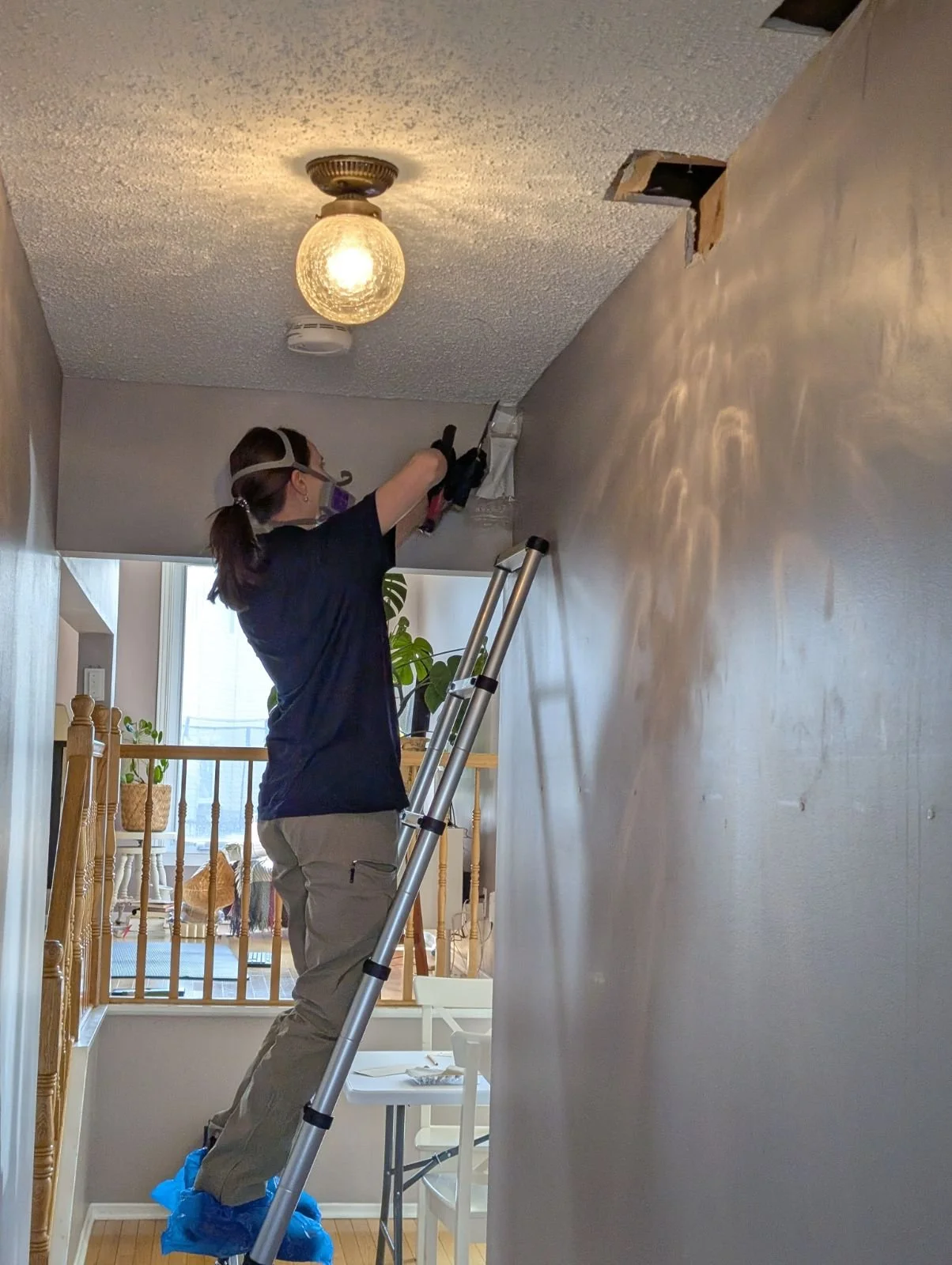
Recently, our team headed out to the Sunridge area to begin an exciting new interior transformation. Before our hammers even touched the drywall, we followed our strict safety protocol. We worked with the experts at Axxonlab, who curated the samples and processed them through their lab.
We are thrilled to report that the results came back negative! This was the best news possible—it meant no hazardous mitigation, no specialized abatement teams, and a project that could jump straight into the demolition phase exactly on schedule.
But why are we so diligent about this? If you live in an older home, here is everything you need to know about the history, the risks, and the reality of asbestos.
Axxonlab
What Exactly is Asbestos?
Asbestos isn’t a man-made chemical or a synthetic product; it is a group of six naturally occurring fibrous minerals composed of thin, microscopic "needles." For nearly a century, it was hailed as the "miracle mineral" of the construction industry.
The reasons for its popularity were simple. Asbestos is:
Incredibly Heat-Resistant: It doesn’t burn, making it perfect for fireproofing.
Non-Conductive: It’s an excellent insulator for electrical wiring.
Durable: It resists chemical erosion and adds significant tensile strength to cement and plastic.
Because of these properties, it was used in over 3,000 different building materials between the 1940s and the late 1980s. If your home was built or renovated during that window, there is a high statistical probability that asbestos is hiding somewhere in the structure.
A Lesson from History: Our Trip to Thetford Mines
To truly understand the scale of this industry and its impact on North American architecture, you have to go back to the source. Last summer (2025), the Bader-Loyer family took a road trip to Thetford Mines in Quebec.
If you are "construction nerds" like us and love to dive deep into the history of building materials, we cannot recommend this visit enough! Thetford Mines was once the heart of the global asbestos industry. The town is literally shaped by the mines, with massive "tailing piles" (the leftover rock from mining) creating a landscape unlike anything else in Canada.
It was a very cool experience—the local museum offers a fascinating (and safe) look at how the mineral was extracted and shipped all over the world. Beyond the history lesson, it was a special trip for us because we got to see some family in the area! Standing at the edge of those massive open-pit mines gave us a renewed perspective on the materials we encounter every day in our line of work.

Bader-Loyer Family in Thetford Mines
The Common Culprits: Where Does It Hide?
In the homes we renovate across the Sunridge area, we find that asbestos isn't always where homeowners expect it to be. It isn't just "pink insulation." In fact, it’s often hidden in:
Vinyl Floor Tiles: Specifically the 9x9 inch tiles and the "black" adhesive (mastic) used to glue them down.
Popcorn Ceilings: That textured "stipple" finish popular in the 70s often contains 1% to 5% asbestos.
Drywall Compound: Even if the board is safe, the "mud" used to join the seams often contains fibers.
Duct Tape: The white, paper-like tape found on older furnace ducting.
Vermiculite: A pebble-like attic insulation that can fall into wall cavities during renovations.
Why We Never Skip the Test
The danger of asbestos arises when it becomes "friable." This is a technical term meaning the material can be crumbled or reduced to powder by hand pressure. When we swing a sledgehammer or pull up old carpet, we risk breaking these materials.
When asbestos is disturbed, it releases microscopic fibers into the air. These fibers are so light they can stay buoyant for days. If inhaled, they lodge deep in the lung tissue, which can lead to serious, long-term health issues like asbestosis, lung cancer, or mesothelioma.
The catch? You cannot see, smell, or taste asbestos. This is why professional testing is the most important step in our pre-construction phase.
The LaBader Process: Peace of Mind
When we start a project, we don't guess. We partner with specialized firms like Axxonlab to ensure everything is handled by the book.
Curation: Professionals identify the most likely "hot spots" and take physical samples without contaminating your home.
Analysis: Samples are viewed under Polarized Light Microscopy (PLM) to confirm the presence and type of asbestos.
Action Plan: If it’s positive, we bring in an abatement team to remove it safely. If it’s negative (like our Sunridge job!), we can move forward with confidence.
Getting a "Negative" result isn't just a win for the project timeline—it’s a win for the long-term health of our clients and our crew. We want you to enjoy your newly renovated home knowing that every square inch is safe for your kids, your pets, and your future.
Planning a Renovation?
If you own an older home and are ready to update your space, don't let the "what ifs" stop you. At LaBader Construction, we handle the logistics of safety, testing, and permits so you can focus on the fun part: picking out your new finishes!
Contact us today to discuss your vision for your home!